Revenue and Profit: five questions to try now
Real past-paper questions, the answer key from the mark scheme, and the explanation that goes with it. No account needed to answer them.
Question 1
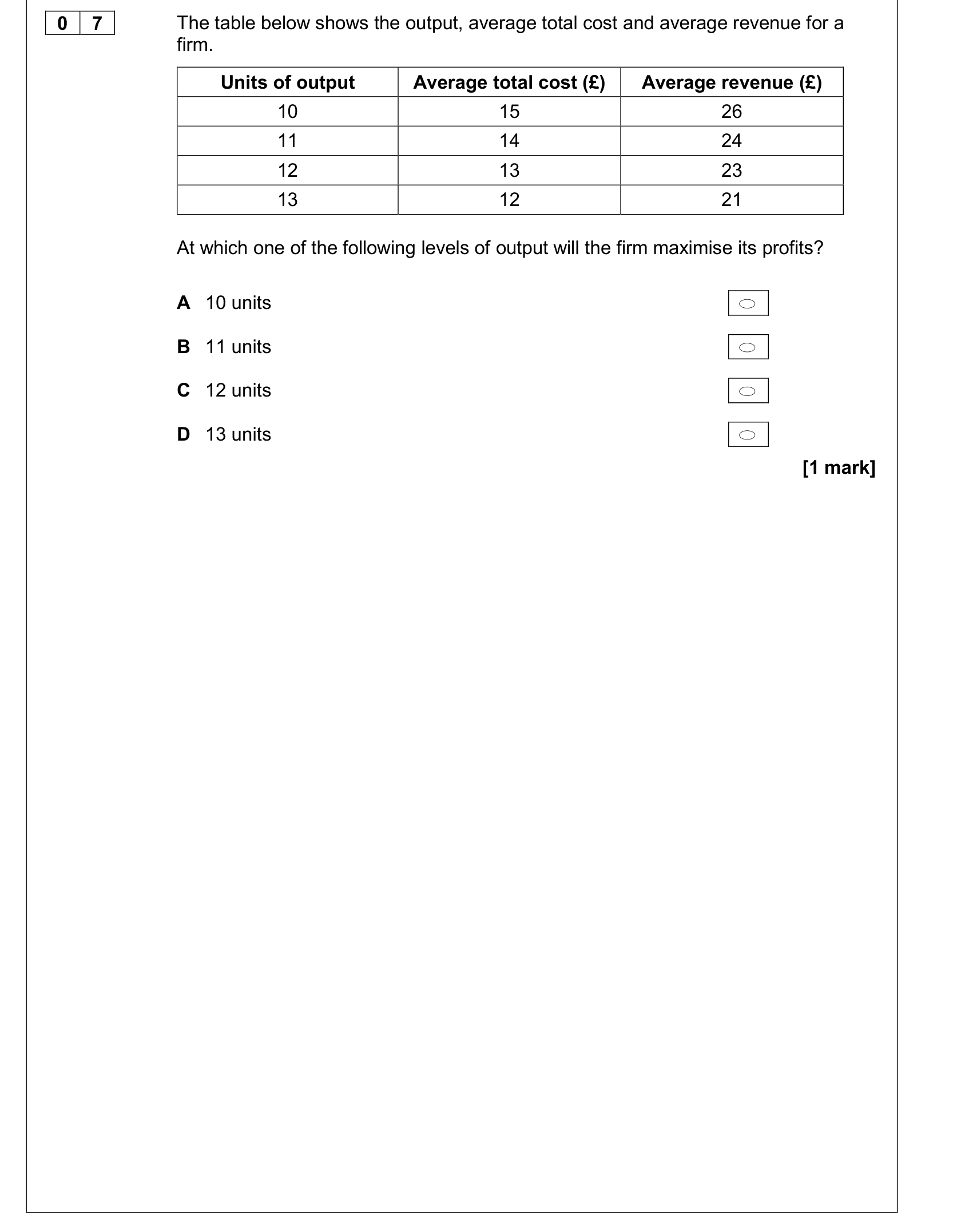
The table below shows the output, average total cost and average revenue for a firm. Units of output Average total cost (£) Average revenue (£) 10 15 26 11 14 24 12 13 23 13 12 21 At which one of the following levels of output will the firm maximise its profits?
Answer: C.
Options A, B, and D are incorrect because they result in lower total profits. At 10 units, profit is £110 (10 × [26-15]). At 11 units, profit is £110 (11 × [24-14]). At 13 units, profit is £117 (13 × [21-12]). Since £120 is the highest figure, 12 units is the correct level for profit maximisation.
Question 2
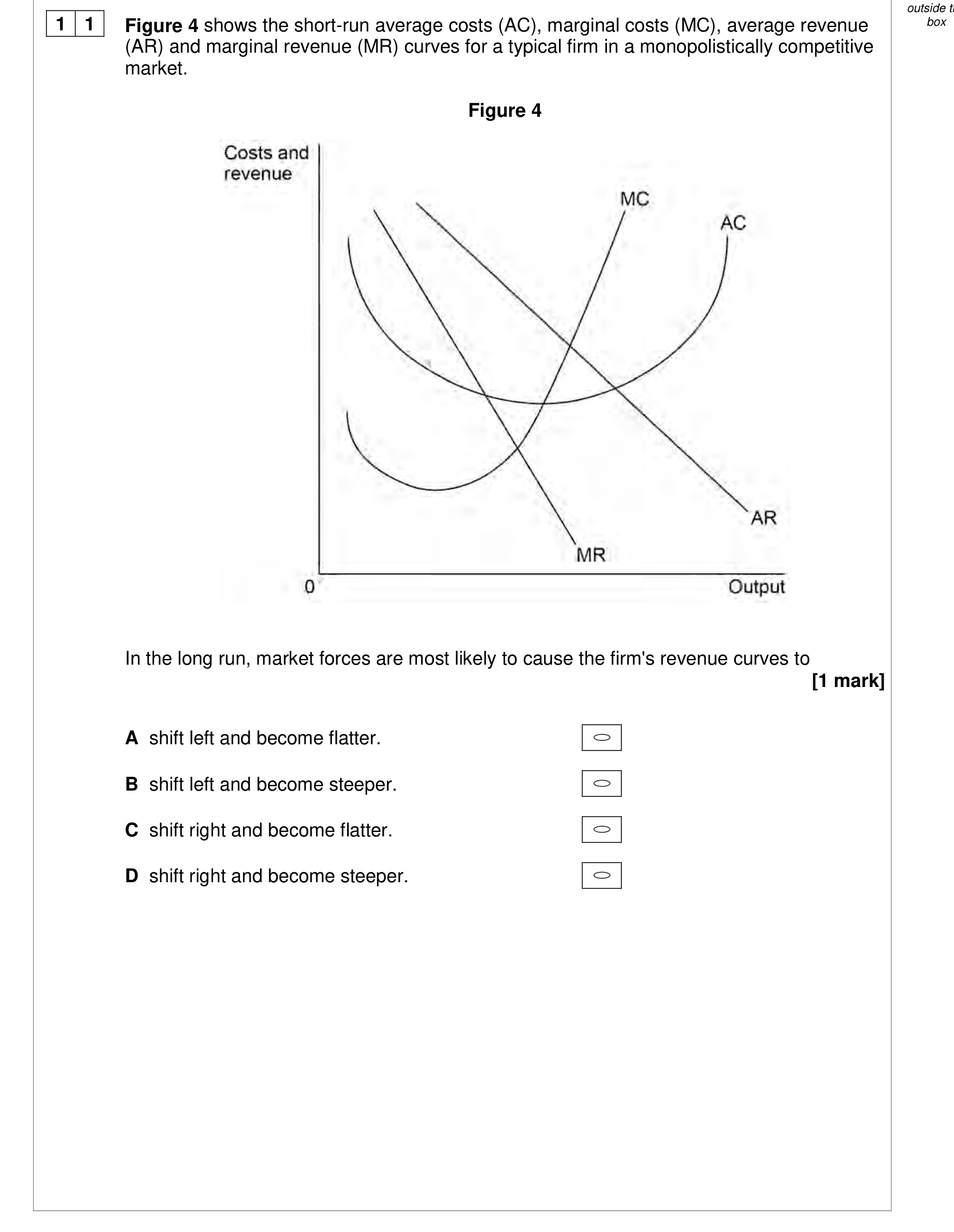
Figure 4 shows the short-run average costs (AC), marginal costs (MC), average revenue (AR) and marginal revenue (MR) curves for a typical firm in a monopolistically competitive market. Figure 4 In the long run, market forces are most likely to cause the firm's revenue curves to
Answer: A.
Options B and D are incorrect because the entry of new firms increases competition and product differentiation, which makes demand more elastic (flatter), not less elastic (steeper). Options C and D are incorrect because the entry of new firms reduces, rather than increases, the individual firm’s market share, causing the demand curve to shift leftward toward the Average Cost curve, eventually eliminating supernormal profits in the long run.
Question 3
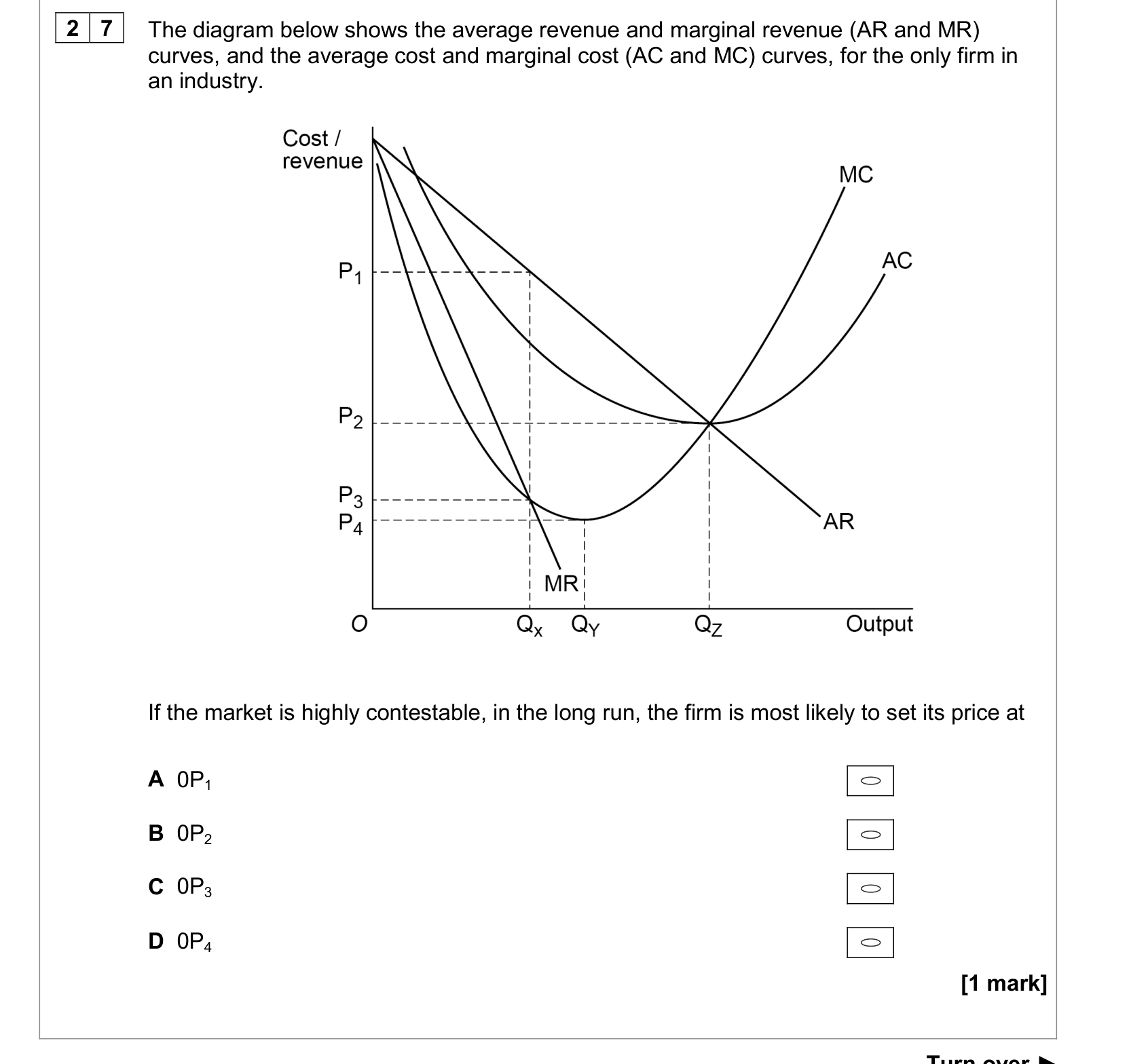
The diagram below shows the average revenue and marginal revenue (AR and MR) curves, and the average cost and marginal cost (AC and MC) curves, for the only firm in an industry. If the market is highly contestable, in the long run, the firm is most likely to set its price at
Answer: B.
Question 4
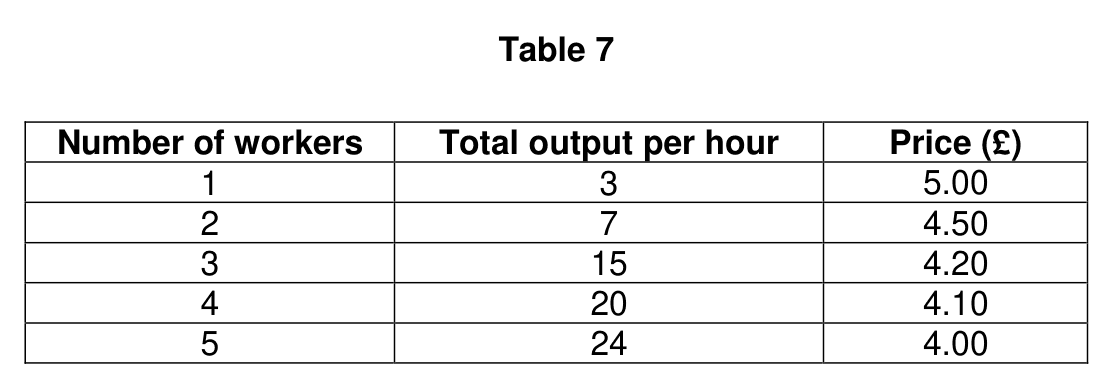
Table 7 shows how the number of workers employed by a profit-maximising firm affects its total output per hour and the price it is able to charge. 1 worker: 3 units at £5.00. 2 workers: 7 units at £4.50. 3 workers: 15 units at £4.20. 4 workers: 20 units at £4.10. 5 workers: 24 units at £4.00. The firm pays its workers £18 per hour. It has no other variable costs and its fixed costs are £3 per hour. How many workers will the firm employ?
Answer: C.
Question 5
Figure 5 shows the average revenue ( AR ), marginal revenue ( MR ) and marginal cost ( MC ) curves for an industry which was perfectly competitive but is now a monopoly. The cost and revenue curves remain unchanged. Figure 5 Which of the following areas shows the total deadweight loss of consumer and producer surplus resulting from the structure of the industry changing from perfect competition to monopoly?
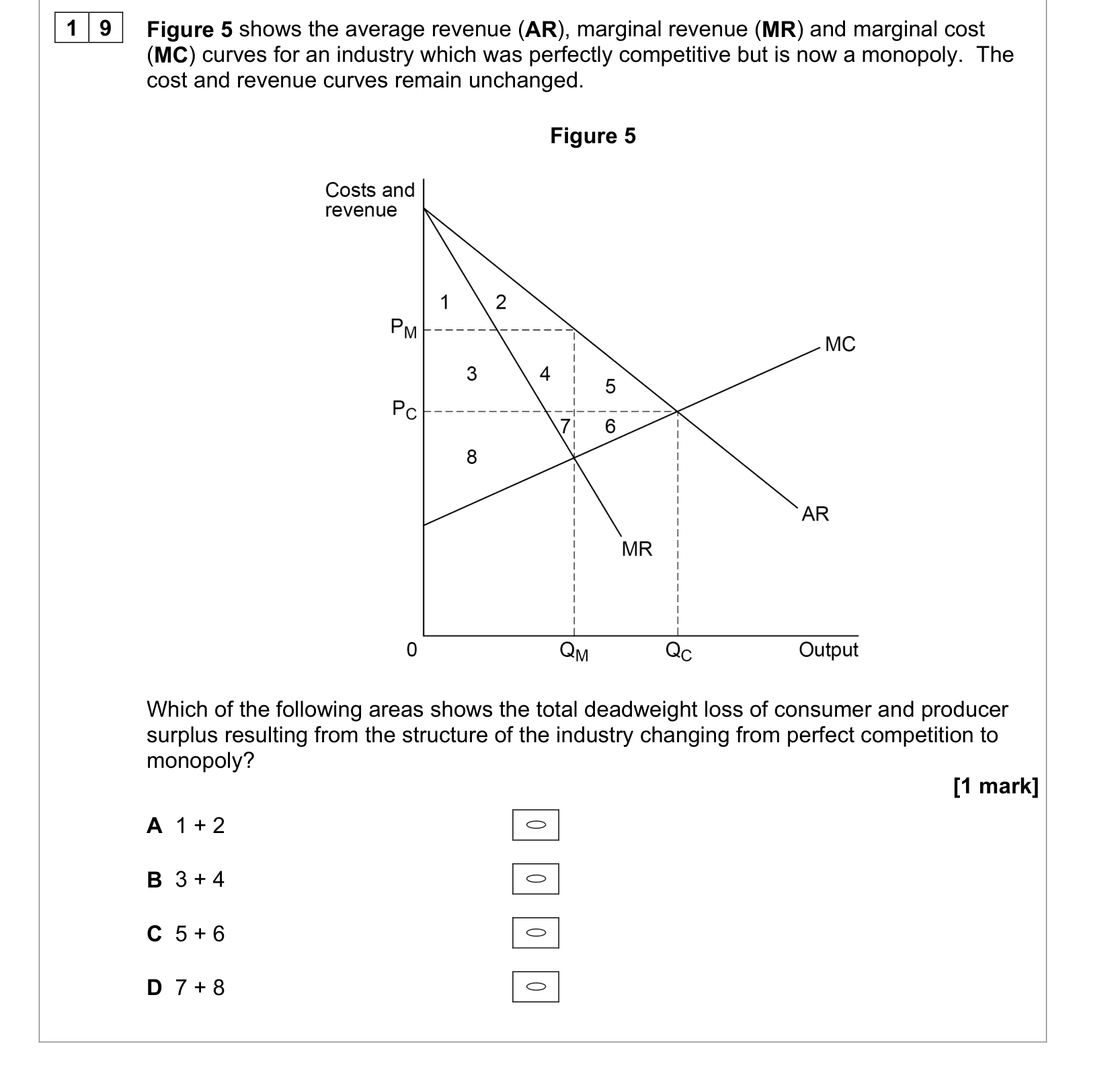
Answer: C.
Options A, B, and D are incorrect because they refer to areas representing either producer surplus gains or simple transfers from consumers to the monopolist. These areas redistribute existing wealth rather than representing the total "leakage" of welfare loss that defines the deadweight burden.
What this practice covers
These questions are drawn from past AQA A-Level papers. You answer, you find out immediately whether you were right, and you get the reasoning for the correct option and for each distractor. Wrong answers go to a mistakes locker so you can come back to exactly those.
Practice is free. You need an account only so your progress and your mistakes are still there next time.
What examiners see students get wrong here
These are the errors that cost marks on revenue and profit, taken from our own topic notes. Read them before you practise and you will recognise the traps in the questions.
- Saying normal profit means zero profit. It is zero economic profit but a positive accounting return, and it is a cost.
- Drawing MR anywhere other than twice the gradient, cutting the axis halfway along AR.
- Forgetting that in perfect competition AR = MR = price.
- Confusing revenue maximisation (MR = 0) with sales maximisation (AR = ATC).
- Giving the shut-down point as ATC rather than AVC in the short run.
- Stating MC = MR without the marginal reasoning behind it.
Revise it first
If any of the above is unfamiliar, work through the notes before practising: Revenue and Profit revision notes.