Profitability ratios: five questions to try now
Real past-paper questions, the answer key from the mark scheme, and the explanation that goes with it. No account needed to answer them.
Question 1
A company purchases a product that costs $120. The company expects to make a gross margin of one-third.
What is the company’s mark-up?
Answer: B.
Question 2
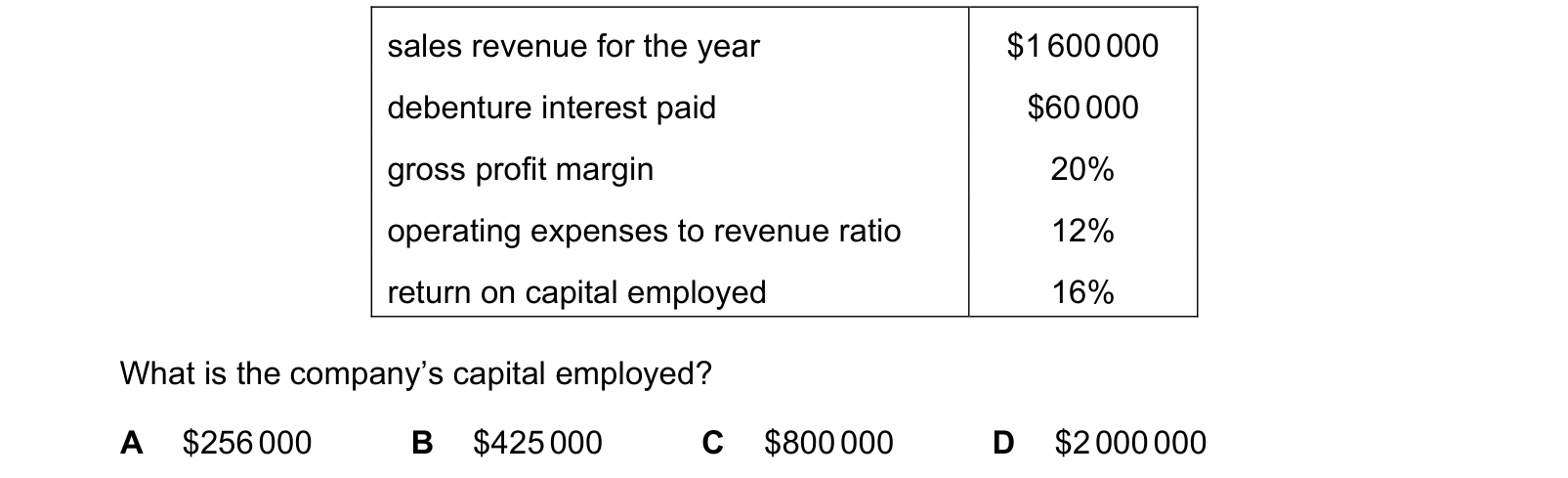
The following information is available for a company.
sales revenue for the year $1 600 000
debenture interest paid $60 000
gross profit margin 20%
operating expenses to revenue ratio 12%
return on capital employed 16%
What is the company’s capital employed?
Answer: C.
Question 3
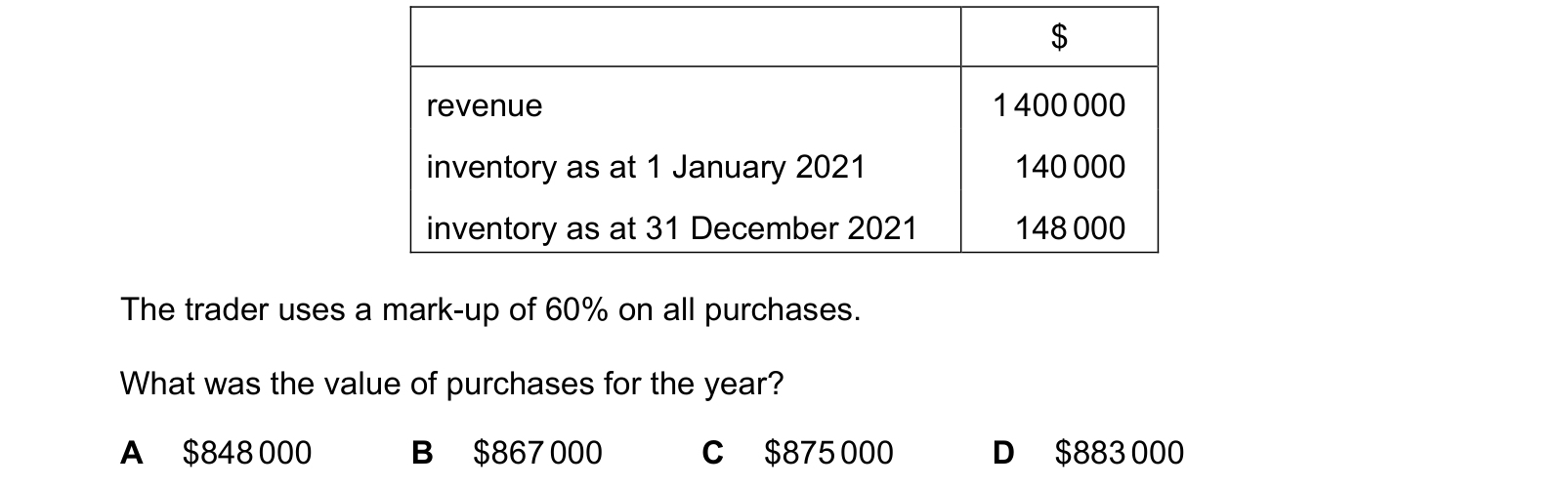
The following information is available for the year ended 31 December 2021. $ revenue 1 400 000
inventory as at 1 January 2021 140 000
inventory as at 31 December 2021 148 000
The trader uses a mark-up of 60% on all purchases.
What was the value of purchases for the year?
Answer: D.
Question 4
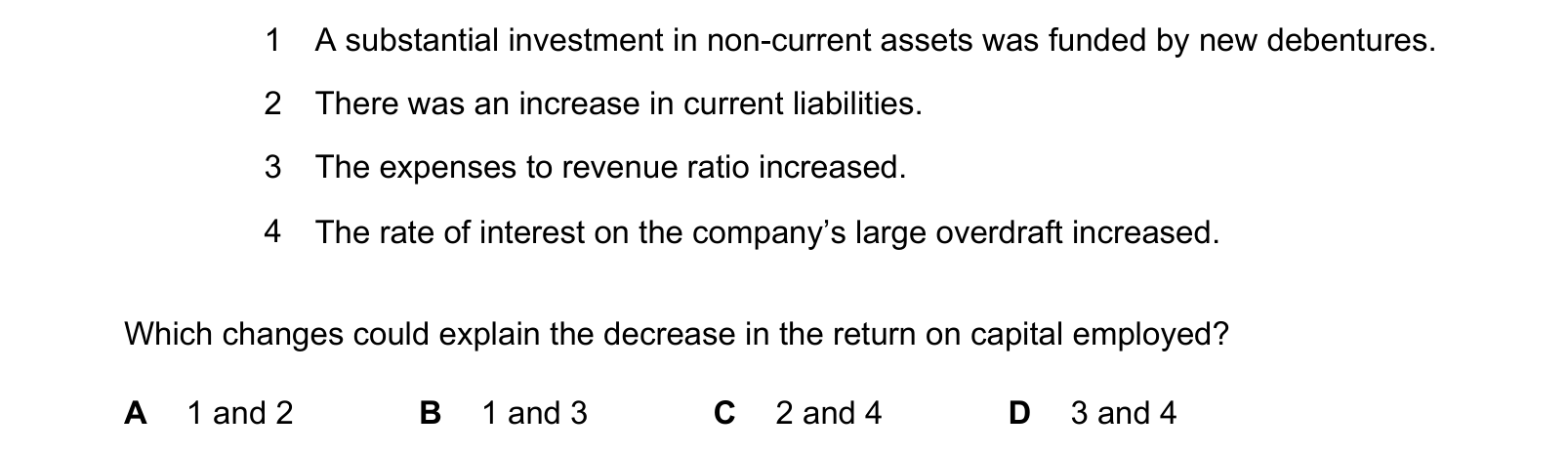
A company’s return on capital employed decreased to 10% in the current year from 15% in the previous year.
The directors have noted the following changes during the current year. Which changes could explain the decrease in the return on capital employed?
Answer: B.
Question 5
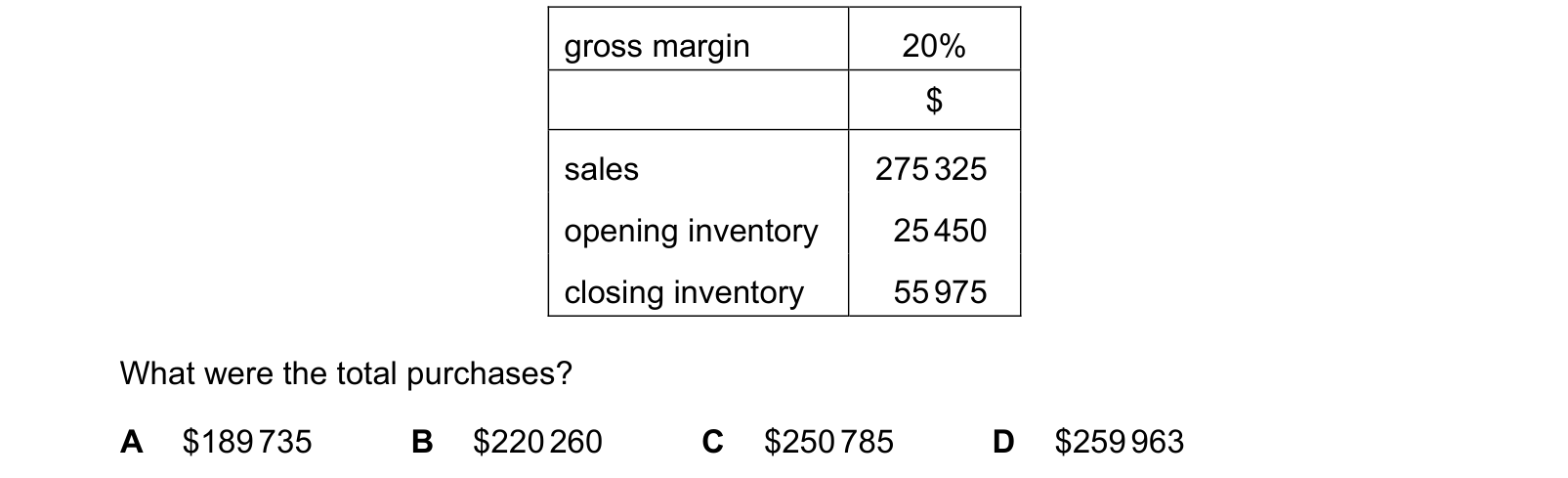
A business provided the following information.
gross margin 20% $ sales 275 325
opening inventory 25 450
closing inventory 55 975
What were the total purchases?
Answer: C.
What this practice covers
These questions are drawn from past CIE 9706 Accounting papers and filtered to profitability ratios. You answer, you find out immediately whether you were right, and you get the reasoning for the correct option and for each distractor. Wrong answers go to a mistakes locker so you can come back to exactly those.
Practice is free. You need an account only so your progress and your mistakes are still there next time.
What examiners see students get wrong here
These are the errors that cost marks on profitability ratios, taken from our own topic notes. Read them before you practise and you will recognise the traps in the questions.
- Using profit after interest in ROCE while including the loan in capital employed.
- Confusing mark-up with margin. Mark-up is on cost, margin is on revenue.
- Saying gross margin fell "because costs rose" without saying which costs. Expenses do not affect gross margin at all.
- Quoting the ratio again as the explanation of the ratio.
- Comparing ROCE across different industries and drawing a conclusion.
- Recommending "cut costs" with no specific cost and no consequence.
- Forgetting that a percentage can rise while the money profit falls, if revenue fell further.
Revise it first
If any of the above is unfamiliar, work through the notes before practising: Profitability ratios revision notes.