Competitive Market Equilibrium: five questions to try now
Real questions, the answer key from the mark scheme, and the explanation that goes with it. No account needed to answer them.
Cross-board concept practice · originally a CIE 9708 question, used here because the concept is the same. It is not IB Economics past-paper material.
Question 1
The diagram shows the short-run equilibrium for a firm operating in a monopolistically competitive market. What is not likely to occur at the long-run equilibrium?
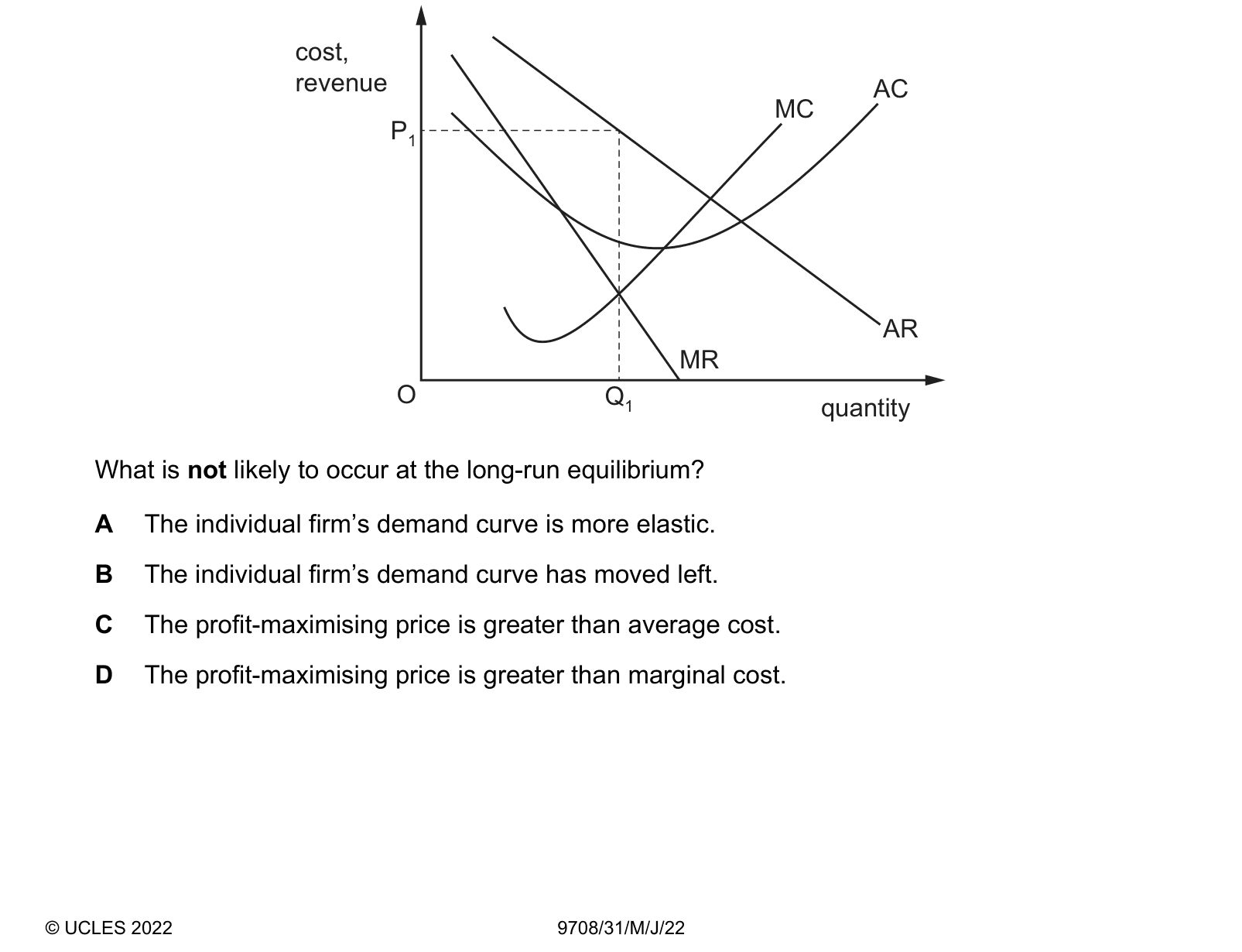
Answer: C.
Cross-board concept practice · originally a CIE 9708 question, used here because the concept is the same. It is not IB Economics past-paper material.
Question 2
The diagram shows a competitive market in equilibrium with price P and quantity Q sold. Which area represents the producer surplus?
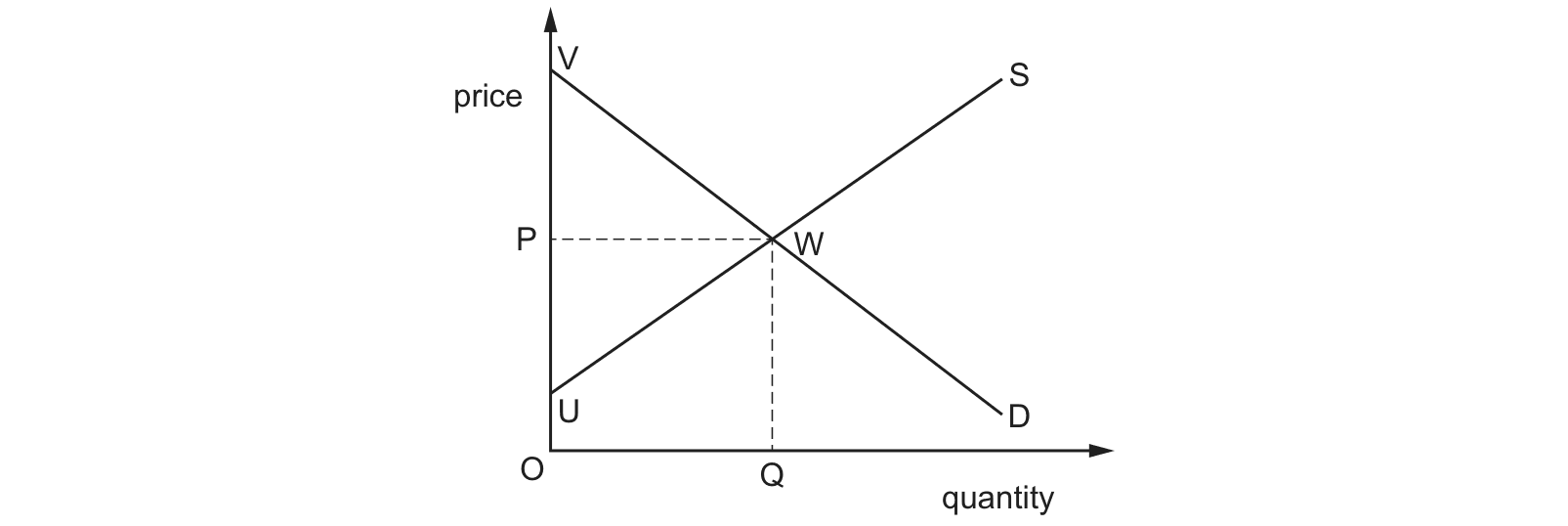
Answer: A.
Cross-board concept practice · originally a CIE 9708 question, used here because the concept is the same. It is not IB Economics past-paper material.
Question 3
The table shows a competitive market in equilibrium in two periods.
market price period quantity traded (cents)
1 50 10000 2 60 12000 What could explain the change from period 1 to period 2?
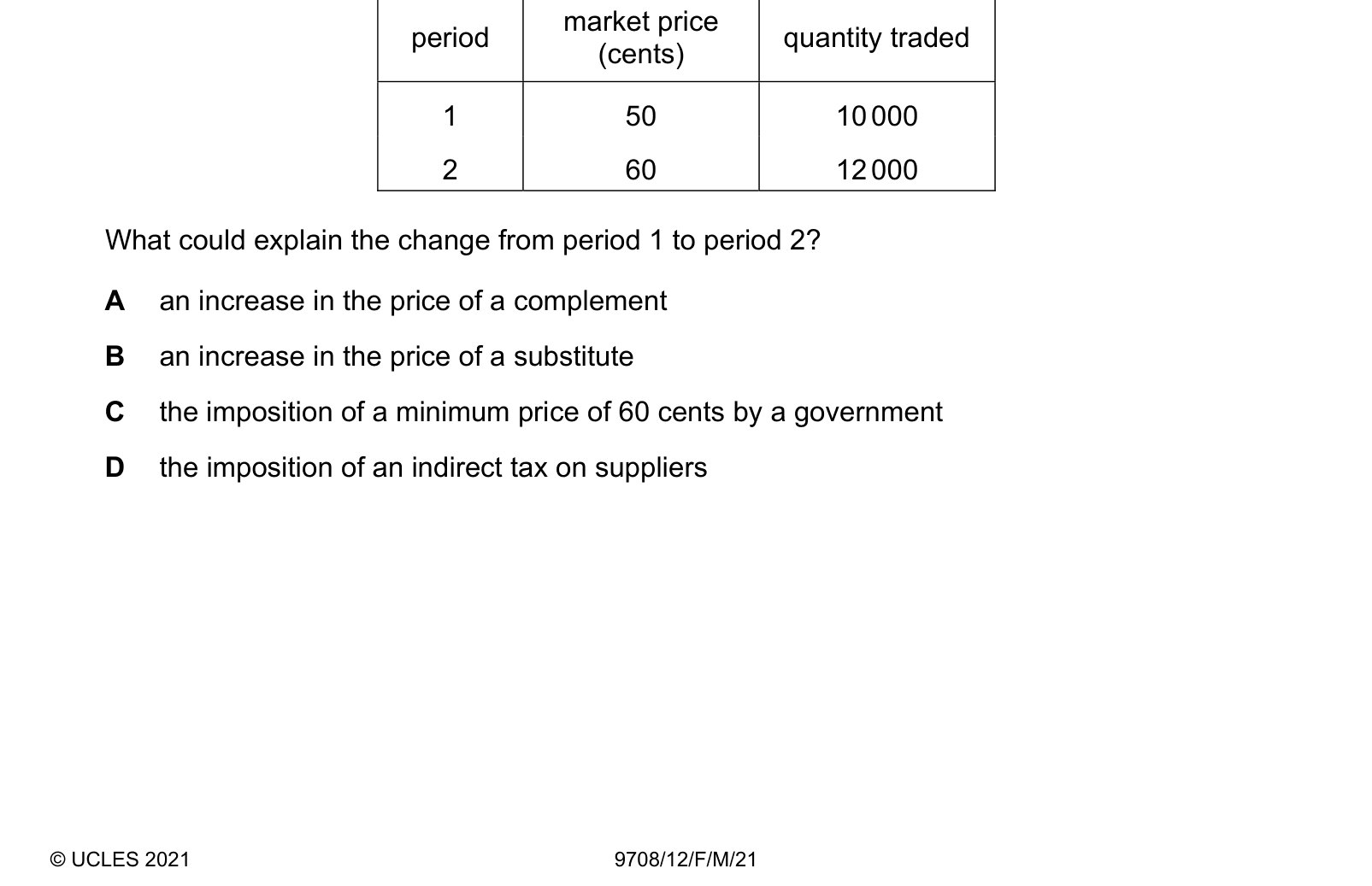
Answer: B.
Cross-board concept practice · originally a CIE 9708 question, used here because the concept is the same. It is not IB Economics past-paper material.
Question 4
Why might the long-run equilibrium of a profit-maximising firm in a monopolistically competitive market differ from its short-run equilibrium?
Answer: B.
Cross-board concept practice · originally a CIE 9708 question, used here because the concept is the same. It is not IB Economics past-paper material.
Question 5
A firm in monopolistic competition is maximising profit and producing at the minimum point on its average total cost curve. What could not be correct?
Answer: C.
What this practice covers
These questions are drawn from past Cambridge papers, mapped across to this topic because the concept is the same. You answer, you find out immediately whether you were right, and you get the reasoning for the correct option and for each distractor. Wrong answers go to a mistakes locker so you can come back to exactly those.
Practice is free. You need an account only so your progress and your mistakes are still there next time.
What examiners see students get wrong here
These are the errors that cost marks on competitive market equilibrium, taken from our own topic notes. Read them before you practise and you will recognise the traps in the questions.
- Confusing a surplus or shortage (a disequilibrium at a given price) with a shift of a curve.
- Shifting a curve to correct a shortage. Shortages are corrected by price changes and movements along the curves.
- Forgetting to relabel the new equilibrium price and quantity on the diagram.
- Ignoring the price mechanism's three functions when asked how resources are reallocated.
- Claiming a determinate outcome when both curves shift.
- In surplus calculations, using the wrong intercept, or the pre-shift quantity as the base.
- Saying the market is "efficient" without explaining that total surplus is maximised where price equals marginal cost.
- Treating allocative efficiency as though it also meant the outcome was fair.
Revise it first
If any of the above is unfamiliar, work through the notes before practising: Competitive Market Equilibrium revision notes.